.png)
The Inbox Grind
What NOT to do with email
I’ve worked in email for most of my professional career — in fact, I’ve twice run email programs for daily offer businesses. And I find the puzzle that is a successful email program fascinating. Who should get it, when do they want it, what message, where does it fit in the broader outreach picture…
I recently attended a wine auction, and I’ve started receiving follow-up emails from some of the participating wineries. There were a couple of glaring issues that prompted me to start writing. So many wineries are needlessly getting it wrong.
The Mobile Divide
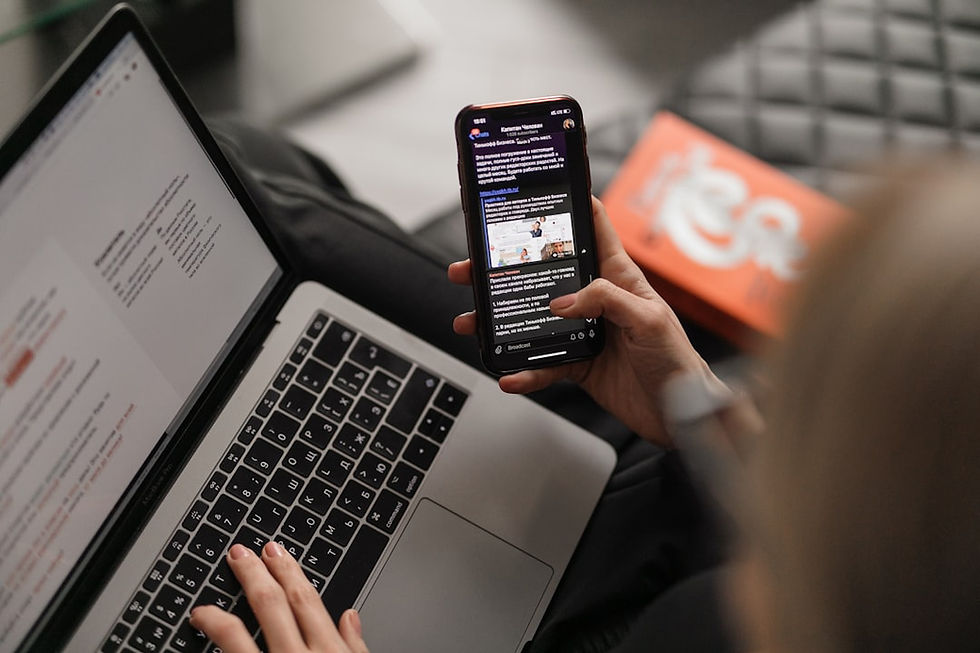
I’ve seen this one over and over again: emails that aren’t responsive or optimized for mobile viewing. Tiny, illegible text. Funky formatting.
And it’s easy to understand how it happens. A busy marketer (or, as is sometimes the case in the wine business, a direct-to-consumer manager who is really a hospitality professional or a wholesale salesperson) drafts and reviews an email on their computer. Forgetting to look at the mobile preview or forgetting to look at the draft on their phone. Maybe they just don’t even know how to look at or fix the problems.
But I know plenty of people who almost exclusively access their personal inboxes from their mobile devices. And unless they’re a true fanatic of a brand, they’re unlikely to go the extra mile to read an email that's not formatted for their ease of access.
And just like that, you’ve lost a portion of your audience.
The Novel
The wine business is driven by storytelling. It’s both a romantic notion and a practical one for fine wine — there are a lot of technical details that make wine unique (terroir, grape variety, winemaking, etc), and it’s a product largely sold purely on the basis of personal taste.
But the four-page equivalent book of text isn’t going to hold a customer’s interest. Most of us won’t even read a professional email that spans pages, let alone something for personal reasons.
Some careful editing and concentrated messaging prove that sometimes less is more.
The Compounding Sins
Your email should have a purpose: sell wine, encourage someone to book a tasting or purchase an event ticket, etc. And hiding the ask isn’t going to help matters. Again, it’s easy to understand how it can get lost in the storytelling. You don’t want to seem too pushy or too commercial. And above-the-fold space is at a premium - particularly on mobile devices.
But to get people to engage, you need to keep it easy for them. Don’t make them scroll endlessly. Don’t hide links with super-subtle formatting.
Not to be a cliche, but K.I.S.S. (keep it simple, stupid). Make it easy for your customers to do what you want them to.
The Over-Ask
Coming back to that K.I.S.S. mentality: do not overload your emails with too many objectives or too much important information. Pick a primary objective and make that the focus of your email.
I’m not saying don’t include some secondary messaging or even a secondary call-to-action, but understand that most people won’t execute more than one action from a single email.
And if you are trying to convey important information (say, details about parking at an event), make it available in easily digestible bite-sized pieces. Don’t bury important information. Help yourself and your customers.
Play with formatting.
Make it digestible.
K.I.S.S.
Who Me?
Personalization…or a lack thereof.
One of the event follow-up emails I recieved was trying to get this right. It included a line that said: It was great to chat with you at the event. Except it was a winery I was already familiar with, and given the time constraints, I chose NOT to visit their table. I understand what they were trying to do. But it missed the mark and was a bit jarring as I didn’t actually speak with them.
Personalized messaging was absolutely appropriate for this event, but it does need to be done right. And it requires good data to be done well.
For example, if you know a club member of 10 years has never purchased a single bottle of white wine from you, maybe don’t send them an exclusive offer on your latest Chardonnay release. Or don’t send a first-time visitor a “It was great to see you again” message.
The Time Lag
There is an appropriate time window for sending emails — particularly when they are tied to an event such as an auction or even a first tasting room visit. We are all trying to do more with less, and juggling priorities can make it easy to lose track, but timing is crucial. In fact, data shows that the first 30 days are crucial in building a relationship.
Conversely, too often can be a problem. You want to stay top of mind but don’t want to overwhelm or annoy (more on this later…).
Again, use your data to capture the right person, with the right message, at the right time.
The Myopic Focus
Even within larger organizations, it can be easy for the digital marketing team to lose sight of the larger business objectives. You hear the familiar refrain: That’s not my responsibility. Or even: I don’t have the data I need to accomplish that.
It’s important to foster co-operative, cross-functional attitudes to increase sales, drive visitation, or even simply increase brand awareness. Encourage data capture for appropriate personalization. Build automated flows to encourage timely follow-up. Iterate on your message and build out A/B testing.
The target is always moving, and I draw on my 15-plus years of email experience to help my clients navigate the complex puzzle that is email marketing. Your list is one of your most valuable assets. The good news? None of this is rocket science — it just takes intention, the right data, and a little discipline. Ready to start making the most of it? Let's talk.


Comments